
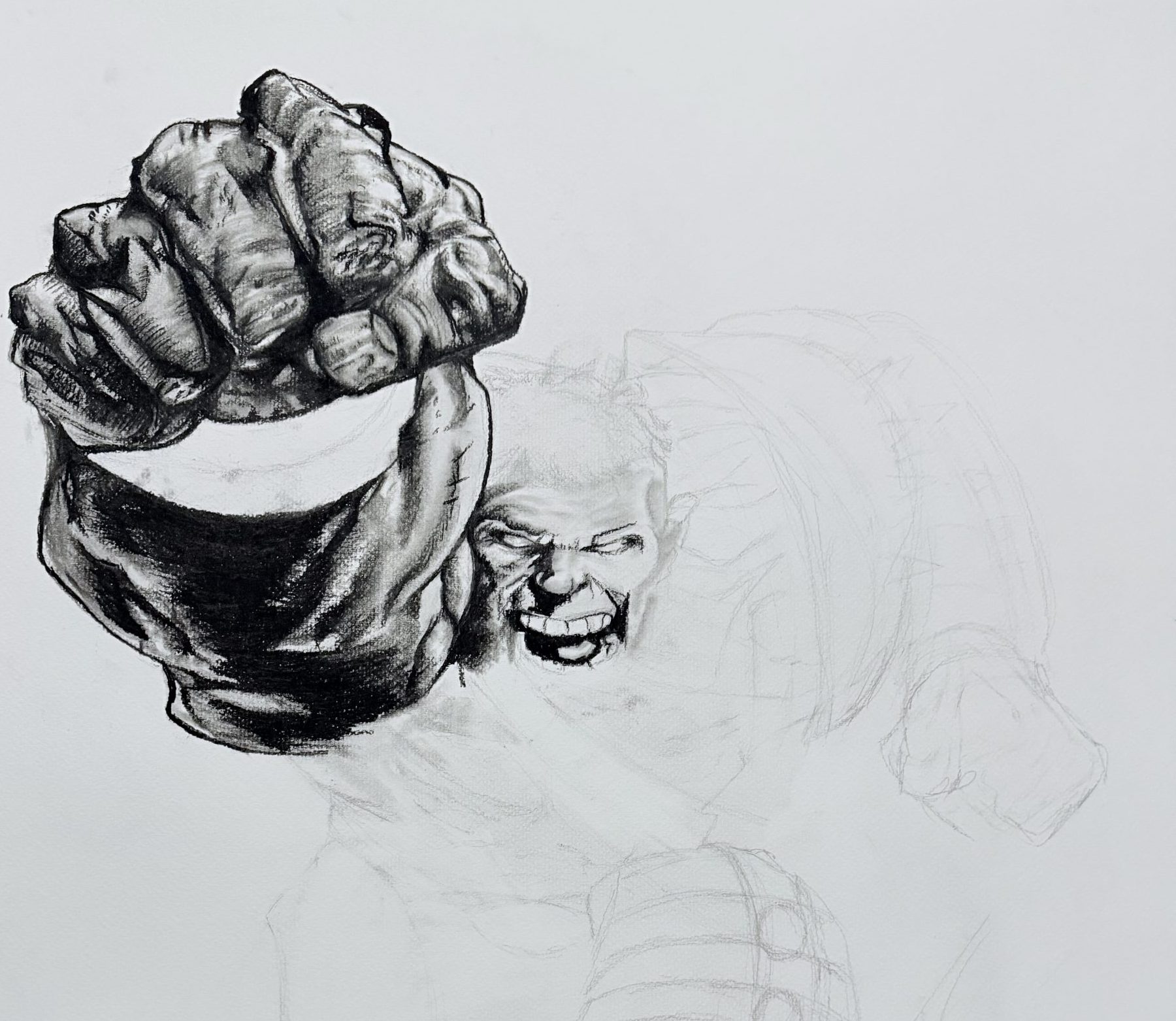
This blog follows on from ‘Mask Off’
The cost?
Performing so much for others that I didn’t even know myself. I didn’t know how to enjoy silence. I didn’t know how to relax without guilt. I was always chasing the next achievement because somewhere underneath it all, I never felt enough.
And then there’s the contradiction of being AuDHD. So many passions. So many ideas. And a nervous system that makes consistency feel like climbing a mountain in the wrong shoes. Functional dysregulation. Struggling to leave the house. And whatever I do, whoever I do it with — I need recovery time. That’s not laziness. That’s my reality. I have to factor it in, always.
The cost isn’t only emotional. It lives in my body.
Waking up, the first thing I do is drink water and take medication. It loosens my body and allows me to move. Have you ever forgotten what tablets you’ve taken as you’re taking them? Even medicating myself is a difficult task. All over body pain. Heaviness and weakness on my left side. Brain fog. No hunger signals, so fuelling myself becomes something I have to consciously manage rather than something that just happens.
I try to get out for a dog walk, but if I haven’t left by 10am I won’t be leaving until after 7pm.
The crowds. The people. The noise.
It’s so overwhelming it’s enough to make me stay home, in my safe space. I collect my car next week and it’s going to change my life. To have a vehicle I can control — the temperature, the lights, the music.
A barrier. A protector. Because it’s never just about doing the task. It’s about getting to the task, and whether that journey will deplete what little energy I have left.
To wind down I have to have a bath. Without my bath I don’t sleep well. And the shows I watch — I struggle with anything new. New characters, new emotional storylines, it’s too much to take in. So I rewatch my comfort shows. Usually animation. I think my inner child is communicating with me through them. And I’m starting to listen.
For a long time I viewed all of this as mental. Anxiety. Low mood. Sensitivity. Things to push through or manage quietly, because I look fine on the outside. And because I look capable, it’s harder to talk about the struggle. So I performed capability. In urgency I thrive — give me a deadline and I’ll meet it. But without that urgency, without that external pressure, my nervous system doesn’t know how to begin.
The neurodivergent lens gave me words for the first time. Not a label to hide behind, but a language. A way of finally understanding what my body has been doing all along — and why.
Because here’s what I’m learning: everything the body does is to protect us.
The hypervigilance. The sensitivity to noise and crowds. The need for recovery time. The way I can’t relax without guilt. These aren’t failures. These are a nervous system that learned, early, that the world required constant monitoring. That safety was never guaranteed. That performing was survival.
I used to reach for a pill. Now I’m trying to get curious about what my body is actually responding to. What situations trigger the alert. What it needs to know it’s okay.
This is more than something I want to do. This research is necessary.
We are handed one lens and told it is absolute. One framework. One set of diagnoses. One way of understanding what is happening in our bodies. But I don’t believe this is all my experience will be. I don’t believe I have to give up and sacrifice this much day to day. I believe there are other ways to support my body — ways I haven’t been taught, or that simply haven’t been shared with me.
What is the baseline of my nervous system? How do I keep it regulated? What can neuroscience tell us about rewiring the brain? How much of my life experience has shaped the struggles I face today? Is any of it reversible?
Living in survival mode, performing according to standards placed on me by others, I ended up ignoring my body — making her work harder and harder just to keep me safe. I want to learn to listen to her instead. To look within. And to encourage others to do the same.
My research opens that doorway. It sheds light on those of us who have been left in the shadows. It looks at neurodivergence as a whole — how it affects women, and most importantly to me, how it affects Black women. Because there are additional layers we navigate that aren’t spoken about enough.
The next post will introduce the research formally. But this is where it begins — in the body, in the lived experience, in the refusal to keep accepting that this is simply how things are.
Leave a Reply