Freeform
I used to think my research was about ancestry.
Now I understand it has always been about unmasking.
The core of any research idea I’ve ever had has always been about one thing: understanding myself.
Where I’m from.
What I’m made of.
How I grow.
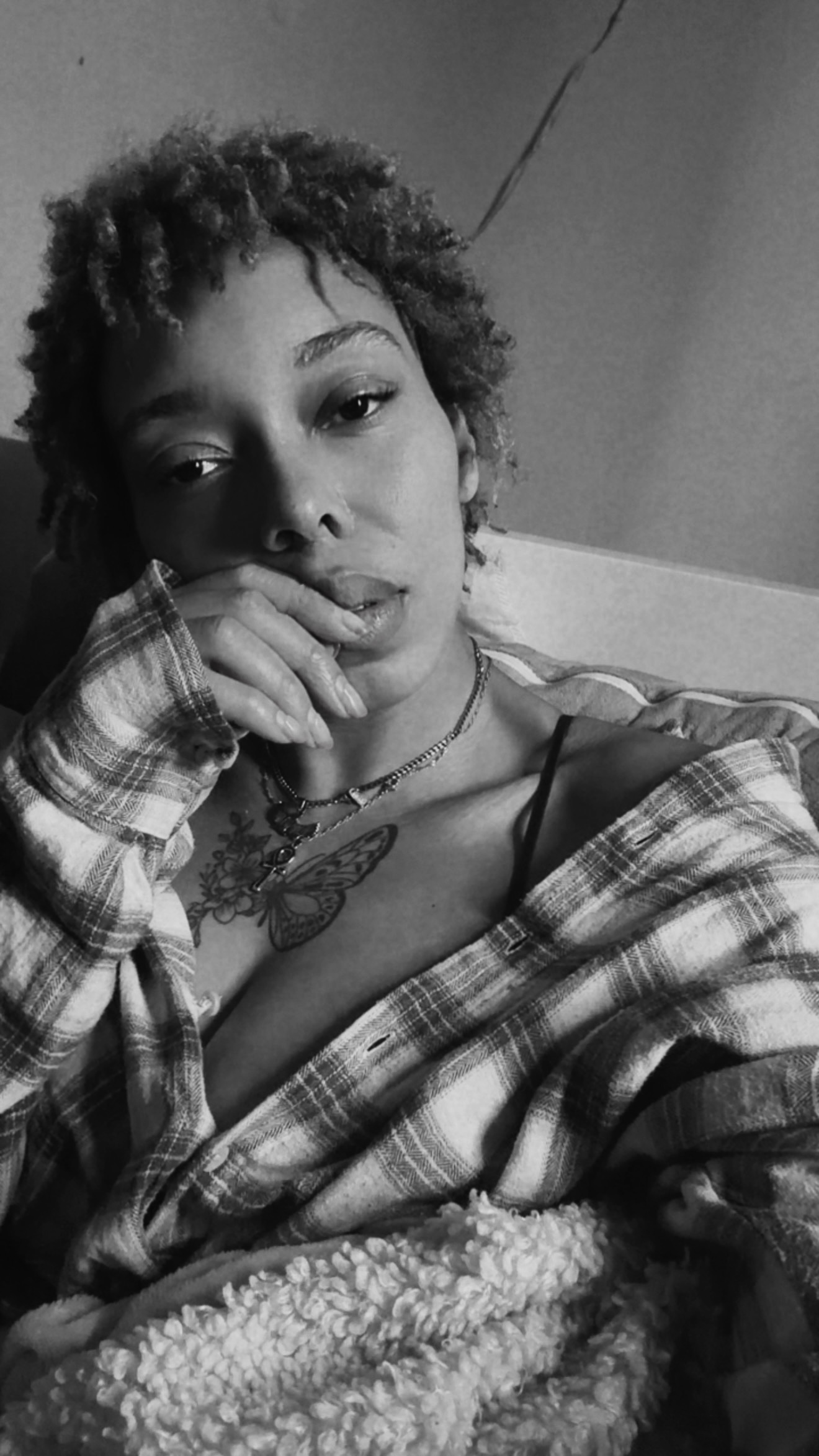
January 2025 I started my loc journey. I loved not having to lay a wig down or scramble £150 together for knotless braids. I loved waking up as myself. But even then, I was still manipulating. Crochet hook in hand. Trying to manage the process. Trying to keep it neat. Trying to avoid looking too “rough.” Too “unkempt.” Too “unprofessional.”
Those weren’t my fears.
Those were fears I inherited.
In August 2025, after a double bleach job on five-month-old starter locs, my hair began snapping. Breaking. Shedding. I felt like the universe was forcing something I was scared to do myself: restart.
I hadn’t liked the parting.
I hadn’t liked the colour.
But I didn’t speak up.
So I cut it.
Right down to a pixie.
And I started again.
This time: organic parts. Letting my hair choose her own sections. Last time I waited for length to avoid the “ugly phase.” This time I embraced it. Some days were hard. I wrapped my head and stayed inside. Fibromyalgia and mental health already make leaving the house heavy. Add feeling exposed on top of that and I disappeared.
But there were days I felt powerful. Minimal manipulation. Soft twisting. Flowing instead of forcing.
Freeform is not a hairstyle.
To call it a hairstyle would minimise it. It is not something that can be installed, replicated, or imitated. It is a commitment. A surrender. A relationship between me and my crown.
It is choosing not to force uniformity.
Not to carve myself into neat, digestible sections.
Not to manipulate growth for approval.
Freeform is a journey.
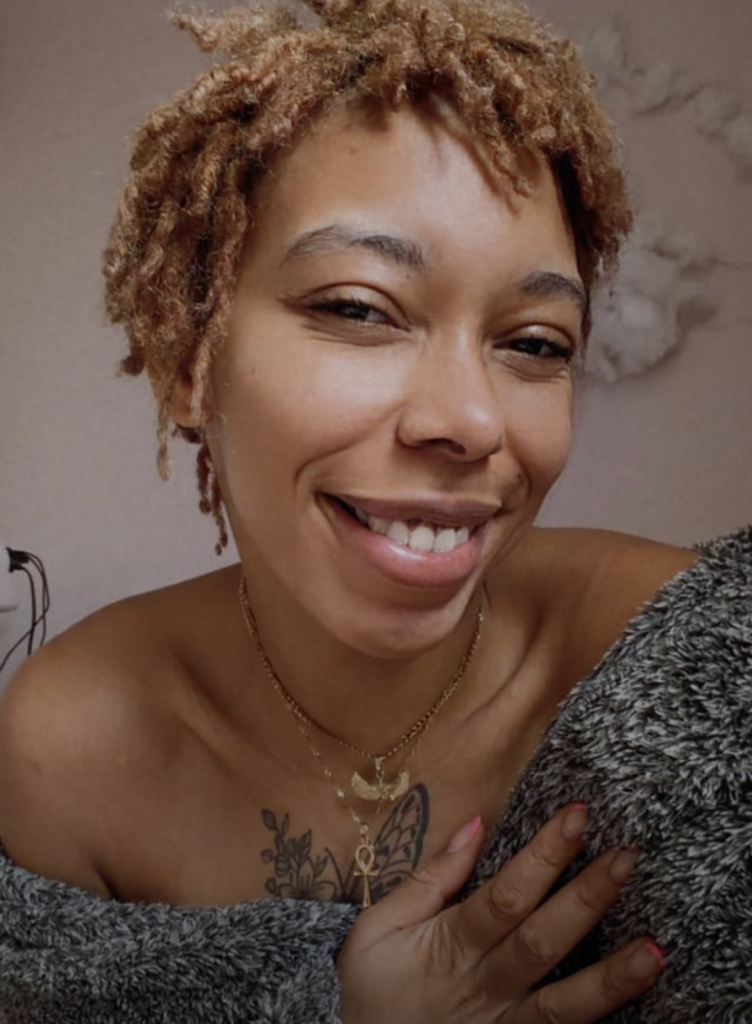
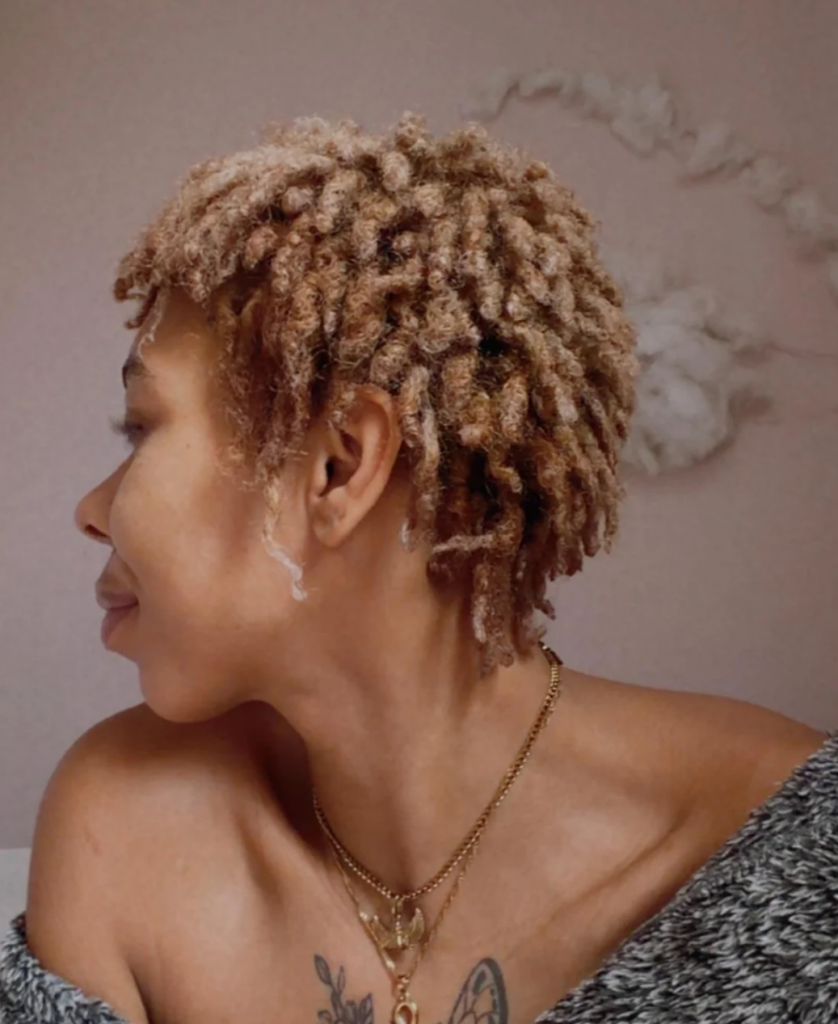
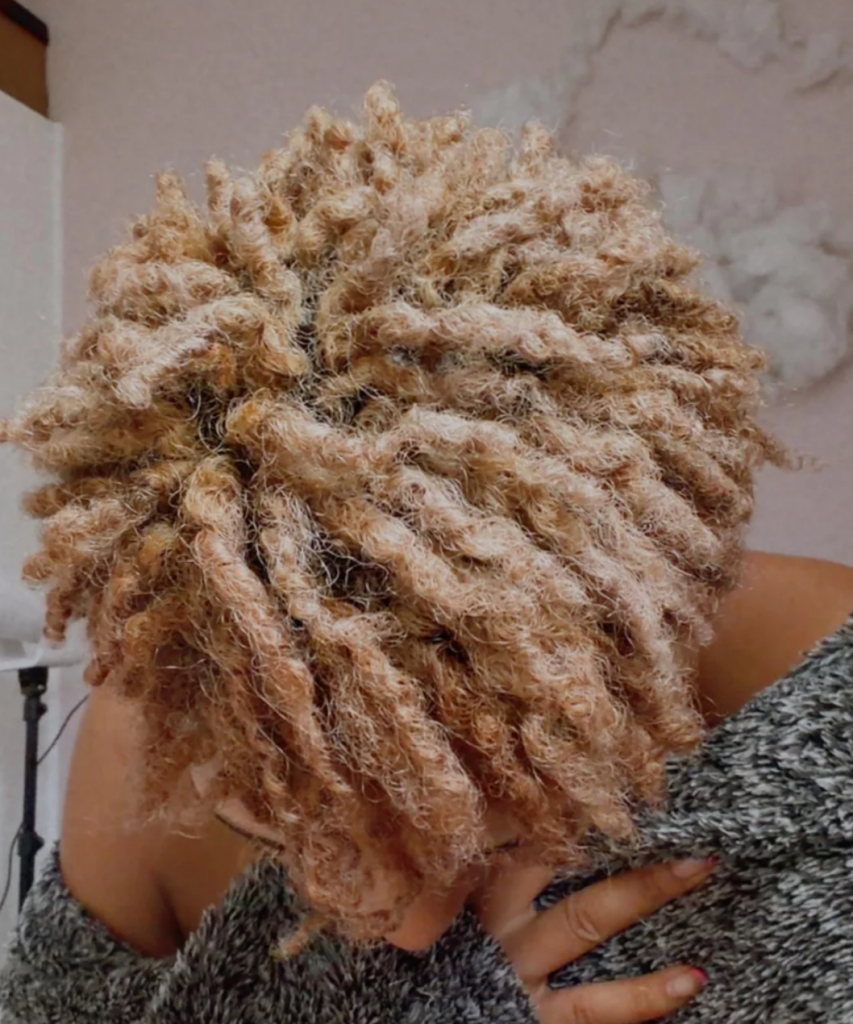
And in choosing it, my nervous system stopped rejecting my reflection. Looking at myself became easier. My authentic image began to signal safety instead of dread.
As a child, being “good” meant going to school, doing my homework, not bringing my mum grief. She was dealing with enough. I didn’t want to add to it. So I withheld. I shrank my emotions. I managed myself.
Learning to withhold caused so much stress in my already sensitive nervous system.
I’ve recently been referred for an ADHD and autism assessment. It wasn’t something I’d ever considered seriously. I did well in school. I was responsible. I was capable. But I was also masking. I learned early that stability depended on me being manageable.
Reading about neurodivergence felt like reading my own life in plain language. The shutdowns. The blank mind. The difficulty explaining symptoms in medical appointments. The way I can articulate anything in writing but freeze in person. The exhaustion. The overwhelm. The sensory sensitivity.
I was diagnosed with BPD in 2022, but it never felt like it fit. It felt like a label placed on behaviour without context.
There is something else I am beginning to question.
The “strong Black woman.”
The compliment that never feels like rest.
Strength has meant silence.
Strength has meant enduring.
Strength has meant downplaying symptoms in medical appointments so I don’t appear dramatic.
Strength has meant carrying pain without witnesses.
But what does that do to a nervous system?
What happens to a body that is never allowed to fall apart?
Black women are praised for resilience while being denied softness. We are called powerful while our distress is minimised. If I am always strong, when am I allowed to be dysregulated? If I am always resilient, when am I allowed to need support?
Maybe resilience is not always a gift.
Maybe sometimes it is evidence of how much we have been forced to endure.
If masking began in childhood to protect my household, and strength continued in adulthood to survive institutions, then my nervous system has been bracing for decades.
That bracing lives somewhere.
Why are women misdiagnosed?
Why are so many neurodivergent women only identified later in life?
What is the cumulative cost of masking across decades?
How do racial expectations intensify that cost?
How can ritual art-making help process what lives beneath the mask?
My loc journey taught me something. Loc journey 1.0 taught me about my crown. What she loves. How often she needs oil. Her density. Her patterns. And now, restarted and organic, she is thriving. Fluffy. Plump. Unique. Unapologetic.
Nobody’s locs are like mine.
Because nobody’s journey is like mine.
Restarting my locs was not about aesthetics. It was about alignment.
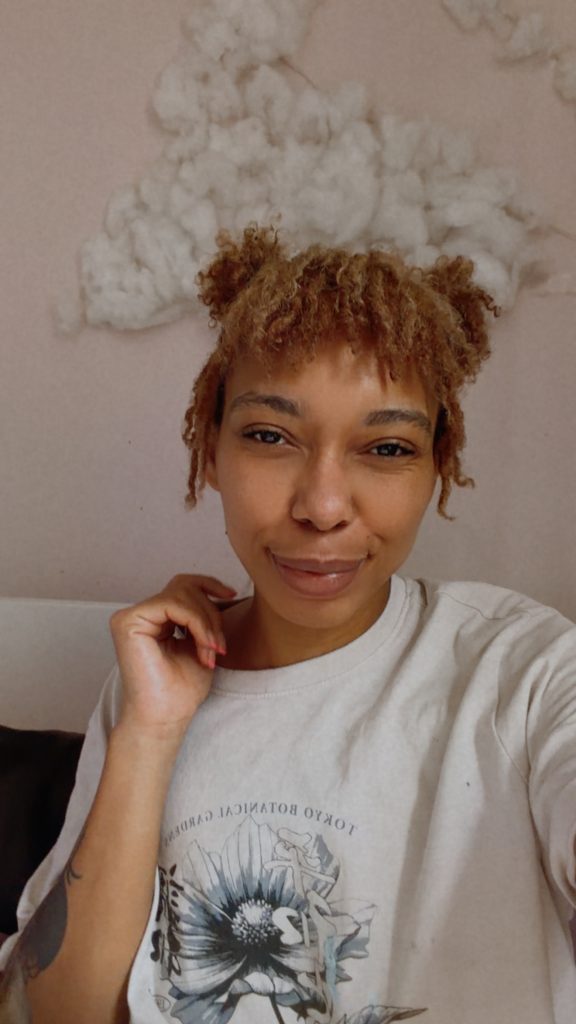
It was a physical decision to stop forcing myself into parts that made other people comfortable.
And now I am making that decision internally.
No more masking.
No more urgency.
No more performing strength for survival.
I don’t struggle to articulate feelings. I struggle to articulate in environments that were never built for my nervous system.
So my research is shifting.
Not away from ancestry.
Not away from ritual.
But toward unmasking.
Toward questioning the cost of long-term performance.
Toward art as the place where my body can process what words interrupt.
Freeform is not a hairstyle.
It is the refusal to be partitioned.
And that refusal is shaping everything.

Leave a Reply